Platforms That Take Your Working Agent Live Without a Single Infrastructure Decision
A guide to hosts that run customer-facing agents for you.
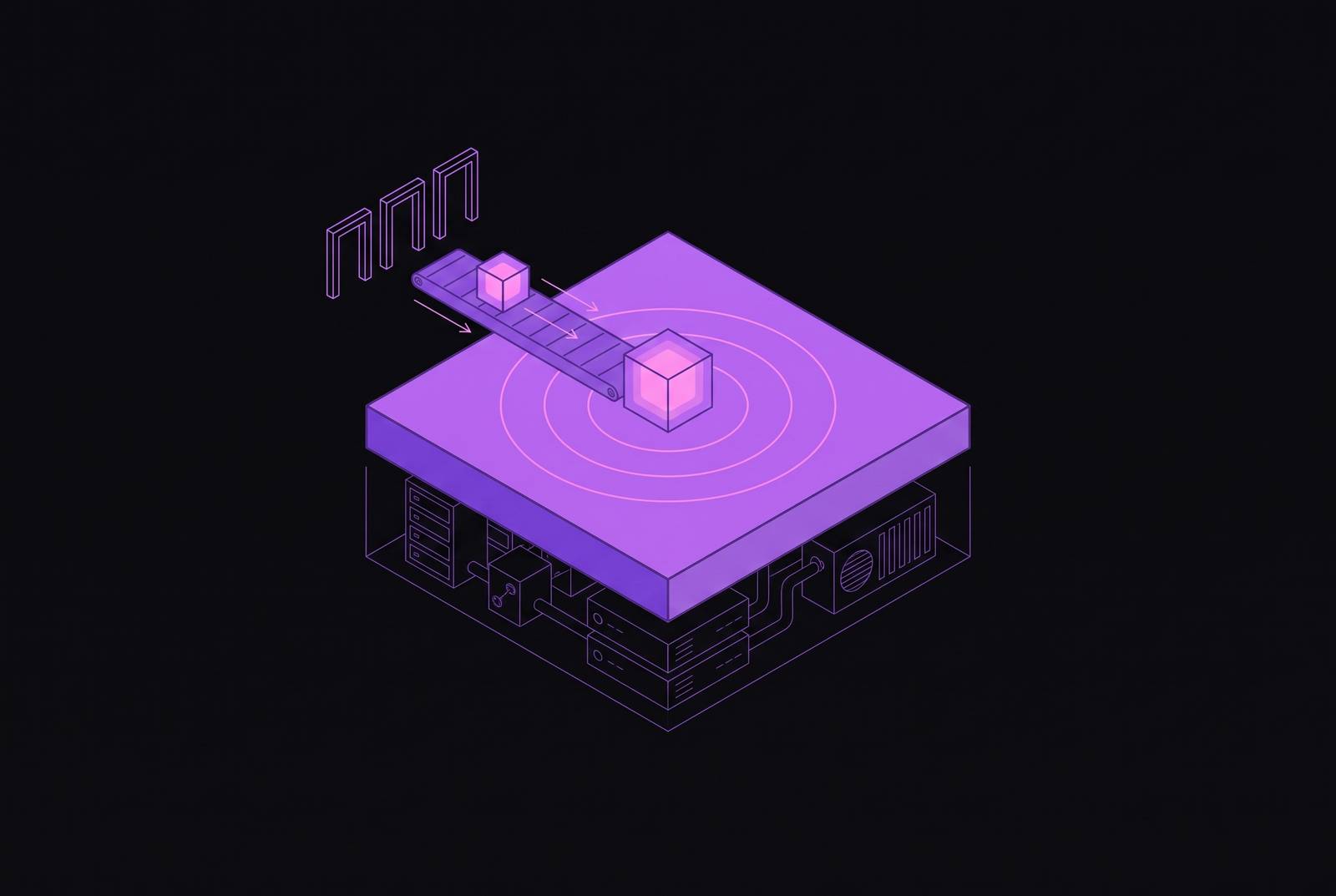
A solo founder can deploy an AI agent without infrastructure operations knowledge by choosing a purpose-built host that handles memory, restarts, monitoring, credentials, customer isolation, and billing controls. The key is buying the whole agent runtime. “Zero infrastructure decisions” is a real option, but only when the platform owns the work between a working agent and a reliable service for paying customers.
Why moving from a working agent to a live product is harder than it looks
An agent that works in a terminal has proved that it can perform a task. It has not proved that it can survive a restart, run overnight, or recover halfway through that task. That difference matters when agents write to databases, send emails, or file tickets with no one watching. A silent failure becomes an incident. Customers also need an audit trail of what happened.
Without a managed platform, the founder inherits OS updates, Docker configuration, SSL, memory storage, restart logic, monitoring, credential storage, and customer isolation. None of that work adds an agent feature. It is a different discipline from building the agent, with its own failure modes and ongoing demands. That production gap is now a solved problem, provided the platform takes responsibility for the whole job.
What "managed" actually means for an agent workload, versus what it means for a web app
Generic PaaS hosting runs web applications, but the developer still has to build the agent layer. Agent infrastructure has three distinct jobs, namely a sandbox, a runtime, and an orchestration layer. The sandbox isolates code execution and provides a filesystem and state controls. The runtime supplies scaling, networking, identity, secrets, monitoring, and uptime. Orchestration records steps so work can pick up after a crash, timeout, or human-approval wait, but it does not isolate code or host services on its own.
These distinctions provide a practical scoring rubric for platforms. Runtime resilience means recovery, scheduling, and support for long-running work. Durable state means a run resumes from its last step with its progress preserved. Isolation and run limits define where code executes and how long it can keep running.
Governance covers agent identity, scoped permissions, audit logs, and approval gates. Portability means models, data, and agents can move to another host. A complete managed host also needs persistent memory, automatic restarts, agent-level monitoring, isolated credentials, and billing controls. LangSmith and Langfuse provide observability that complements a runtime.
How the platform market has sorted itself into tiers with very different tradeoffs
The market has three tiers with different jobs. Hyperscaler runtimes include AWS Bedrock AgentCore, Microsoft Foundry Agent Service, and Google Gemini Enterprise Agent Platform. They offer session isolation and enterprise compliance and work closely with the cloud account, but teams also have to deal with complex IAM and bills based on several usage dimensions. Framework-native platforms, including LangSmith Deployment, CrewAI AMP, and Lyzr Studio + OpenController, focus on state and the path from development to governed production releases.
Purpose-built hosts take a narrower, more opinionated approach. They package memory, restarts, monitoring, and customer isolation so founders do not have to assemble those parts. That is a deployment choice. An internal team with platform engineers has different needs from an operator selling a separate agent to every customer. Trigger.dev, Cloudflare Sandboxes, Vercel Sandbox, Daytona, and Blaxel sit in a parallel component category, covering only one or two infrastructure jobs.
What hyperscaler runtimes actually absorb and where they stop
Foundry’s hosted agents reached general availability in July 2026, allowing teams to bring their framework and model to a session-isolated runtime with identity and observability built in. Release controls still have limits. Traffic splitting between versions is not supported, so a release is a full cut-over. AgentCore supplies hardware-enforced session isolation through its serverless microVM runtime.
OpenAI’s ChatGPT Workspace Agents offer a different cloud-managed route. Available in research preview for ChatGPT Business, Enterprise, Edu, and Teachers workspaces, they run shared agents powered by Codex. They are locked to OpenAI models and have no self-host option. Their workspace setting also makes them a different proposition from provisioning independent agents for customers.
The infrastructure burden does not disappear in this tier. Teams still own IAM setup, framework-level code, billing reconciliation across per-second usage dimensions, and the knowledge needed to configure isolation correctly. Those responsibilities can fit an existing platform engineering team well. They fit less well when a founder’s goal is to ship before hiring an infrastructure operations lead.
What framework-native platforms absorb and what they still leave to the team
CrewAI has an open-source Python framework for role-based multi-agent crews and offers managed deployment through AMP. A crew can deploy through CLI or GitHub, with the first deployment taking about a minute. Traces show agent reasoning, tool calls, how many tokens were used, and cost estimates. It also suits teams that work with multiple agents and need approvals on Flows.
Lyzr Studio makes agents available as API endpoints, with no containers or hosting for the team to wire up. OpenController adds a common release path for agents written in LangGraph, running on AgentCore, or hosted in Foundry. It supports ordered environments, approvals, canaries, and one-step rollback. Each agent receives a workload identity through the team’s identity provider, while the control plane can run in a VPC, on-prem, or air-gapped.
Those capabilities solve a real release-management problem. They do not, by themselves, complete the customer-delivery layer. Teams still have to handle per-customer provisioning, isolation, and billing controls and keep each customer’s instance running. A centralized release path is not the same thing as a managed customer lifecycle.
What platforms let founders deploy customer-facing agents without managing infrastructure?
Purpose-built agent hosts most directly answer that question. This tier packages persistent memory per agent, automatic recovery from crashes, agent-level monitoring, credential vaults, automatically provisioned customer sandboxes, and per-agent billing controls. The distinction is what gets managed after deployment. The founder is not simply buying somewhere to run code, but a service that handles the recurring infrastructure work for each customer’s agent.
Jurniti provides a concrete example of the hosting and isolation approach. Its product pages describe OpenClaw, Hermes, Claude Code, and Codex CLI running in their own Firecracker microVMs, with one tenant per box. That identifies a specific boundary rather than a vague promise of sandboxing. It does not, on its own, establish every other managed-hosting criterion. A founder evaluating any host should establish whether memory, recovery, monitoring, credentials, and billing are included rather than inferring the whole package from its isolation technology.
Isolation architecture: why microVMs matter more than marketing language about "sandboxing"
Pillar Security studied how an attack could escape a sandbox. The Cloud Security Alliance published the findings in July 2026 and described an attack on widely used coding agents. The agent could write something that a trusted component outside the sandbox would later execute. The attack did not require directly breaking the sandbox. The attack showed the risk of relying on the boundary while trusting what crosses it.
Containers share the host kernel, so malicious agent-generated code can put the host and neighboring workloads at risk. MicroVMs use hardware virtualization, giving each sandbox its own guest kernel, virtual CPU, and memory. That creates a stronger boundary around the workload. AgentCore uses microVMs for session isolation, Jurniti uses Firecracker microVMs per agent, and Control Plane uses Kata Containers microVMs.
Does each customer’s agent run in its own microVM or gVisor-isolated process, or inside a shared-kernel container? Can credentials be scoped to each agent instance so that an agent that has been compromised cannot get to another customer’s keys? The Pillar finding also shows why isolation cannot be judged by the sandbox label alone. Trusted components outside it remain part of the security picture.
Integrations: how agents get hands without the developer writing every connector
A running agent still needs authenticated connections to the apps where it acts. Writing each API connector consumes founder time just as surely as configuring compute does. The integration layer therefore belongs in the platform decision, even when a separate service supplies it. Connections let it do useful work on their behalf.
Composio’s catalogue listed over a thousand toolkits as of August 2026, exposing tens of thousands of individual tools. Its Shared Connections feature, introduced in September 2026, lets teammates use an authorized company account without circulating credentials. That removes connector and credential-sharing work from the team. It also brings the security boundary into focus, because access to an external app gives the agent somewhere consequential to act.
Compliance and data privacy: what a SOC 2 badge on a platform does and does not cover
A vendor’s certification covers the controls that vendor operates. Its SOC 2 report may cover infrastructure logging, isolation, and platform access, but not the agent’s logic, the developer’s code, or data written to external systems. The badge is not compliance for the whole product. Procurement needs the scope of the report.
The available evidence differs by vendor and product. AWS offers more than 150 HIPAA-eligible services, including Bedrock and AgentCore. Daytona received a SOC 2 Type II report on July 28, 2026 with an unqualified opinion, offers HIPAA BAAs, and has a GDPR DPA covering EU and UK requirements. Composio’s managed cloud service states SOC 2 and ISO 27001:2022 coverage.
Workspace scope changes the answer for OpenAI’s product. Enterprise deployments inherit ChatGPT Enterprise’s SOC 2 and ISO posture, while Business workspaces have SOC 2 Type 2 but fall outside the ISO 27001/27701 scope. Anthropic explicitly states that Claude Managed Agents is not eligible for Zero Data Retention or a HIPAA BAA. Those limits can rule out a runtime that would otherwise fit.
The lesson for procurement is to ask product-specific questions. Does the vendor offer the BAA the buyer needs, and does its SOC 2 report cover the service being bought or only the infrastructure around it? Are conversations and files excluded from model training? Founders should demand an explicit answer on training use.
White-labeling agent infrastructure as a business model for operators and agencies
For agencies, infrastructure becomes part of the business model. Selling a separate agent to each client calls for isolated memory and vector stores, keys for each client, and logs the operator can check before they reach the client. White-label surfaces let the customer see the operator’s brand. When data and keys can be exported, the operator keeps ownership and can take the client relationship to another host.
Pricing determines how that arrangement scales with the roster. Per-seat plans can erode margin as clients grow, while per-agent metering aligns infrastructure spending with the agents generating revenue. Once a client is live, managed infrastructure can support strong gross margins because the operator is not rebuilding the delivery layer for every account. White-label hosting is a legitimate product model.
Chatbot builders may put the operator’s brand on their own builder bots without hosting the operator’s agent stack. Model-vendor runtimes such as Anthropic Managed Agents and Vertex AI Agent Engine are genuinely managed but framework-locked. That constraint narrows future options when the operator’s value lies in the agent they built.
How to match a platform to a founder's actual situation
The choice starts with who the agent serves, what compliance the buyer demands, and how much infrastructure work the team can sustain. AgentCore, Foundry, or Gemini Enterprise Agent Platform can fit internal agents that run in an existing cloud account when the team has a platform engineer. Teams already committed to a framework can use LangSmith Deployment, AMP, or Lyzr’s release tooling for governed promotion, state, and tracing. Founders who serve customers and have no capacity for ops need the full managed-hosting package.
Teams should use what buyers need to narrow the shortlist before they compare features. That means mapping SOC 2 Type II needs for most B2B buyers, HIPAA BAAs for healthcare, and GDPR DPAs for EU customers to the specific product’s coverage. Portability deserves the same scrutiny before signing. Export and cancellation terms should cover conversations, files, and the agent itself so that leaving later does not become costly.
The final decision is about what the founder will own. A host that leaves customer provisioning, crash recovery, credential isolation, or billing controls to the team has not removed the infrastructure decisions. The right platform is the one whose responsibilities match the work the founder cannot afford to take on.