Self-Hosted vs Managed Agent Runtime Tradeoffs for Early-Stage Products
Managed runtimes let early-stage founders focus on product instead of infrastructure operations.
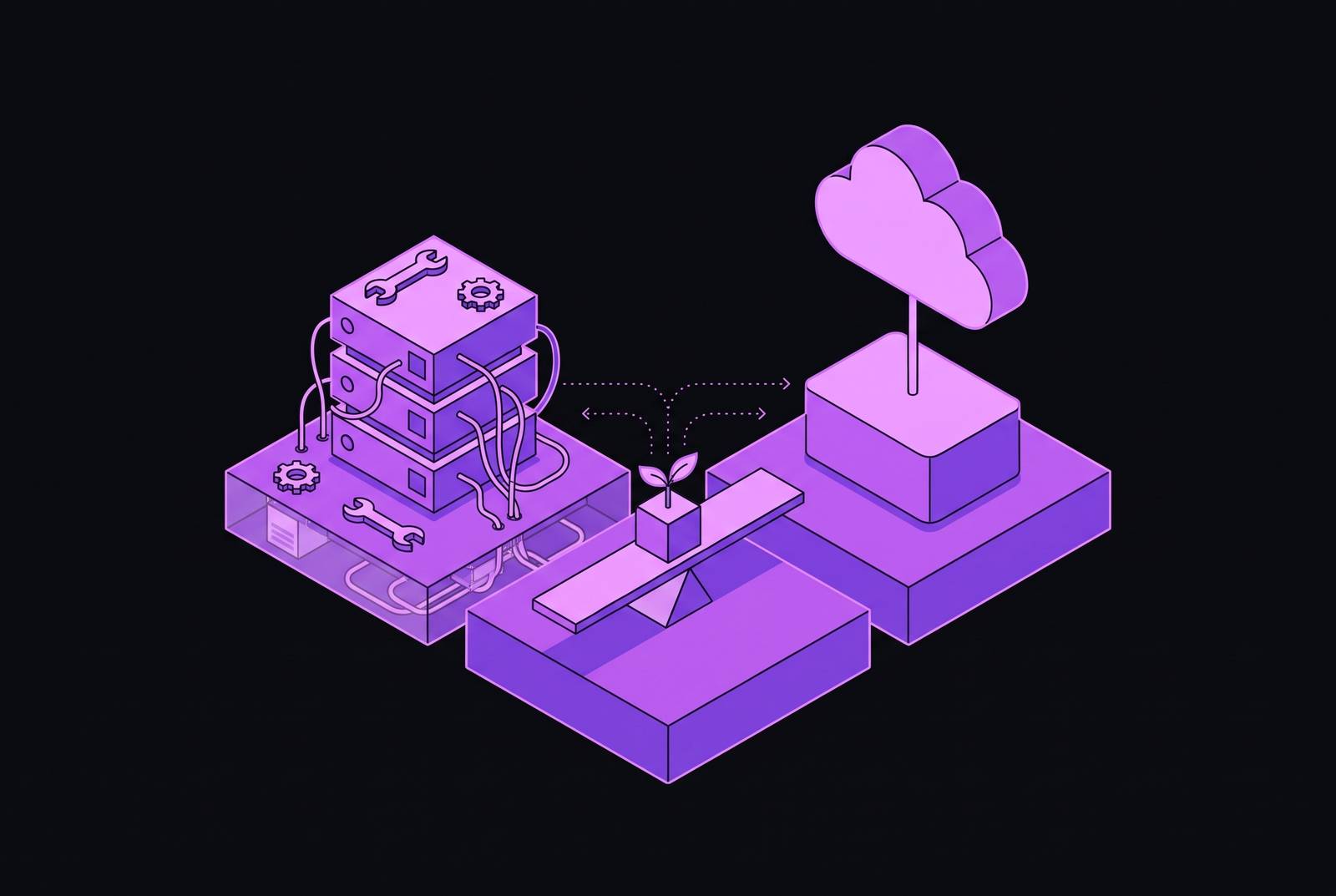
For a solo founder who wants to deploy AI agents without software operations or infrastructure knowledge, a managed agent runtime is the practical default unless data custody, model control, or existing infrastructure capacity points elsewhere. Self-hosted versus managed runtime tradeoffs are a resource allocation decision. Founders must allocate their time between product and customers and keeping agents running.
Why the self-hosted vs. managed decision is a resource allocation bet
The team has only so much time to work. A runtime choice assigns responsibility for patching, monitoring, recovery, and scaling, whether or not the founder notices that assignment during setup. A working deployment settles where the agent executes. It does not settle who fixes it when execution stops.
Two failure modes frame the decision. A team can lose control over where data runs, making a managed service unsuitable for its contracts or compliance requirements. Or it can retain that control while losing the operational time needed to build the product and serve customers. The useful comparison is between the control the product needs and the work the team can afford to own.
What the agent runtime stack actually consists of, and why each layer creates a different operational obligation
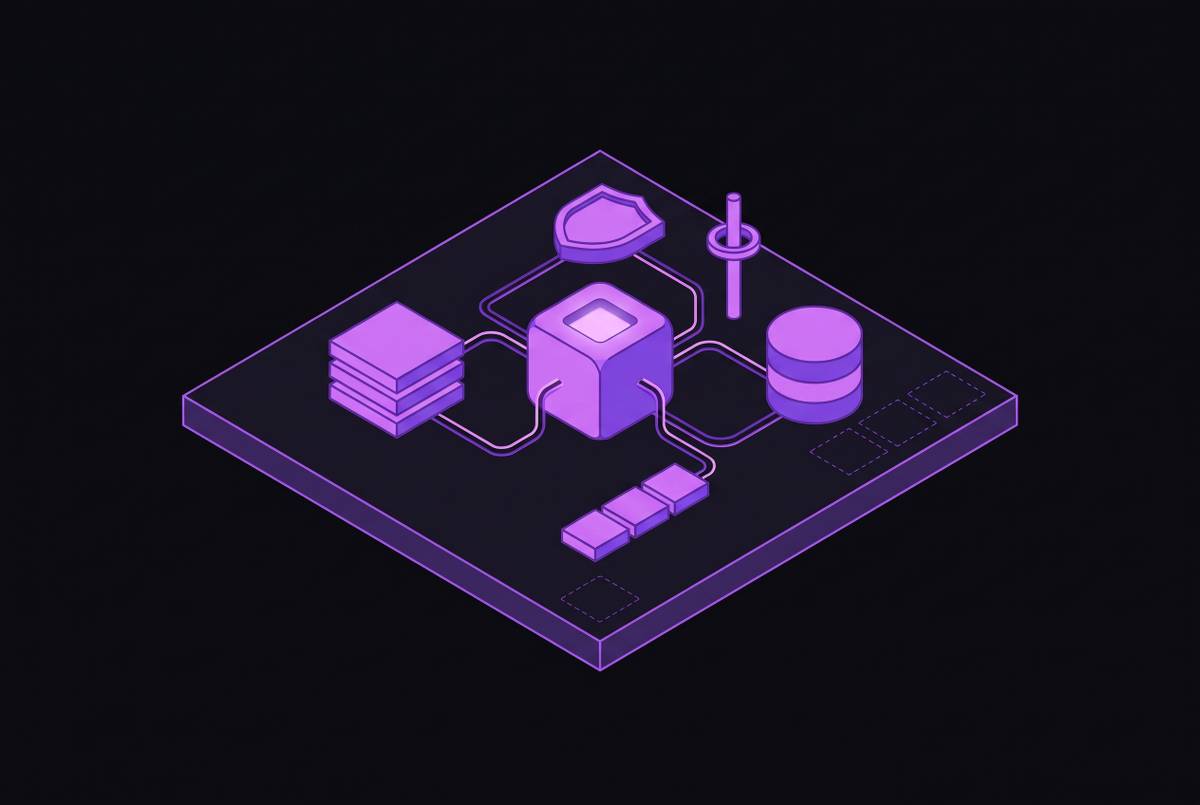
An agent stack has four layers with different jobs. The model reasons, the runtime loops through planning and tool calls, integrations connect to external systems, and the operations layer monitors execution, retries failures, and rotates credentials. These are separate obligations, even when one platform packages them together. Connecting a model does not supply the rest.
Execution also differs from a standard web request. One agent request can involve multiple LLM calls taking seconds each, tool invocations, context retrieval, and parallel subtasks. Infrastructure must therefore support long-running processes, streaming output, and pauses during execution. Function duration limits and cold-start latency on Vercel, Netlify, and Cloudflare Workers can make plain serverless functions a poor fit for multi-step runs.
State adds another boundary to the design. A stateless agent can map to serverless functions, while a stateful agent needs a database, Redis, or a dedicated memory layer. Workflows that pause for human approval or external events also need durable workflow state. Memory alone cannot keep a paused task through a server restart.
The four situations where self-hosting is the correct answer regardless of team size
Hard data-residency requirements are a genuine reason to self-host. If regulation or a customer contract restricts data to a country or specific systems, running the stack there is the most direct route. Some managed vendors can satisfy the same requirement through in-region hosting, but that fit needs verification for the relevant jurisdiction. Physical custody is a separate, stricter case. Defense work, some health records, and air-gapped environments can require possession of the machines even with a vendor’s contractual promise.
Control over the model creates the third case. Pinning an exact model version, running a fine-tune trained on proprietary data, or changing weights on a custom schedule requires control of the serving layer. A managed platform that chooses and upgrades models on its own schedule cannot provide that control.
The fourth case is available infrastructure expertise. If engineers already run production services and have spare capacity, an agent stack is an incremental operating responsibility. Without that capability, meeting the first three requirements means hiring someone as well as downloading software.
The hidden operational costs that self-hosting imposes on teams without an infrastructure function
A self-hosted VPS starts with more than installation. Provisioning, SSH hardening, runtime installation, agent deployment, webhook and reverse-proxy configuration, and monitoring setup take two to six hours for the basic setup described in the notes. That gets the stack ready to run. It does not discharge the obligations that follow.
OS security patches recur, credentials need rotation, and crashes need recovery. Someone also has to update the runtime, review logs, check backups, and troubleshoot memory leaks. Ongoing maintenance takes two to four hours per month at minimum. Those hours are part of the hosting cost, even when the founder does not pay themselves an hourly wage.
The server invoice therefore understates the operating commitment. For a team without an infrastructure function, these duties fall to someone who also owns product development, sales, or customer support. The work may be routine, but it still displaces something. The strongest argument against early self-hosting is the time runtime maintenance takes away from finding out what customers will buy.
Runtime isolation and per-user sandboxing — why this is the hardest early-stage requirement and what it costs to get right
A multi-tenant product must separate each customer’s processes, credentials, state, and audit records. Shared-kernel Docker/runc containers should not be treated as sufficient by default for untrusted agent code in a multi-user environment. The isolation model has to match the threat model. Orca Security’s 2026 runtime guide says to check isolation, secrets handling, and governance when choosing a runtime from day one.
Even with stronger isolation, credentials still need active protection. Daytona’s April 2026 advisory disclosed that an API credential held in sandbox process memory could be read through passwordless sudo by someone with shell access, allowing impersonation of the account that launched it.
NVIDIA’s security guidance states that application-level controls are insufficient once control passes to a subprocess. It recommends fully virtualized environments and fresh user confirmation for potentially dangerous default-deny actions that are not allowlisted or explicitly blocked. HIPAA-eligible workloads, FedRAMP requirements, and EU AI Act Annex III high-risk classification add compliance thresholds affecting isolation and audit evidence. For a startup building a multi-tenant agent product, the architectural target is one isolated, persistent agent per customer, provisioned automatically at onboarding. Building that boundary from scratch means owning every part of it.
State persistence and observability — the failure modes that only appear after the agent has been running for weeks
Even the worst failure can look like a run that finished. An agent can finish with the wrong output, take an unlogged action, or stop mid-task without a way to replay the work. These weaknesses are easy to miss during an interactive demo. They become harder to ignore when the agent has been sending emails, filing tickets, or moving money.
Persistence determines what can survive an interruption. A workflow awaiting approval needs more than a live process, because losing its task context turns a restart into an incident. Temporal, Inngest, Trigger.dev, and Restate provide durable-execution infrastructure for multi-step workflows. They are real options for self-hosted systems, but they are another layer to operate rather than a capability automatically supplied by an agent framework.
Observability answers a different question from persistence. Langfuse and LangSmith instrument agents but do not run them, so their integration remains a separate dependency. An unattended, scheduled agent needs consequential actions to be recoverable and reviewable after the fact. That requires purpose-built audit infrastructure. When nobody is watching at 3am, the evidence must still be there later.
Integrations and credential management as a compounding operational surface
A connector is the start of an operating relationship. OAuth flows, token refresh, rate limits, retries, error handling, and changing APIs all require attention after the first successful tool call. Agent logic can stay unchanged while the systems around it change.
Multi-user products add credential scoping to that burden. Each agent must act for the right user without the builder having to handle each token. Every new customer needs credentials provisioned, tool access scoped, and agent behavior monitored. This work compounds with the isolation and state obligations already described. Without automated provisioning, each new customer adds more work by hand to keep those boundaries in place.
How can a solo founder deploy an AI agent without managing infrastructure, and what does the managed path trade away?
A managed runtime transfers the operations layer to a platform. Its scope can include patching, capacity planning, monitoring, retries, secrets rotation, crash recovery, and migrations when models or frameworks introduce breaking changes. The founder still has to describe the task and judge the result. The practical distinction is who operates the machinery underneath.
With pre-built connectors, managed platforms can be ready for production in minutes. Building a fuller self-hosted system for production can take days to weeks, beyond the basic VPS setup described earlier. Managed hosting services can also preconfigure WhatsApp, Telegram, Discord, and Slack channels, handle webhooks and SSL, and provide round-the-clock uptime monitoring with automatic crash recovery. One-click deployment options include named agents such as OpenClaw, Hermes, Claude Code, Codex, and OpenCode. For a customer-facing product, that deployment layer is useful if it can also provision a separate agent for each user.
Data custody shifts from physical possession to contractual terms, and model choice is vendor-determined on most platforms. Hybrid configurations soften that division by keeping orchestration in the vendor’s cloud while tool execution or data storage runs on customer infrastructure. They change which responsibilities move to the vendor. A managed service fits only when what it covers and what it leaves to the customer match what the product needs.
Scaling architecture and the per-user provisioning problem as the product grows
Provisioning is a growth bottleneck alongside compute. Each customer requires an isolated agent instance, a credential scope, a state store, and a monitoring surface. At low customer counts, manual setup can be survivable. As onboarding becomes more frequent, the same work consumes time that would otherwise go toward sales and product iteration.
White-label infrastructure addresses that problem for operators and SaaS companies. It gives each customer a private, persistent, branded agent that starts at onboarding, while the platform handles provisioning. Lety.ai offers a white-label agent platform for agencies that deliver branded products to clients. The business can charge clients a recurring fee above what the platform costs, which allows for high gross margins even with few clients. Those economics depend on infrastructure handling provisioning.
A Cloud API can make that separation explicit. When a single API call provisions an isolated, persistent, per-user sandbox, onboarding no longer requires the founder to assemble each instance by hand. The analogy is Stripe for payments. Just as payment infrastructure lets software companies accept payments without becoming payments companies, automated agent provisioning lets a product company serve customers without taking on instance management as its main job.
A structured decision map for an early-stage team
The decision starts with constraints. Data residency and compliance posture determine which arrangements are permissible. The infrastructure expertise the team has sets the limits on which operating duties it can take on. Customer count and onboarding cadence determine how quickly manual provisioning becomes a burden. Whether those duties are worth keeping depends on what else the founder could do with that time.
Self-hosting fits when custody requirements are firm, control of model versions is needed, or an existing infrastructure team has time to take on the work. A residency requirement also points toward self-hosting unless a managed vendor can satisfy the jurisdiction-specific rule. Hybrid deployment fits when vendor-hosted orchestration is acceptable but tools or data must stay on customer infrastructure. Managed deployment is the default when none of those constraints requires ownership of the stack. These are different stopping points.
For founders choosing the managed path, the lesson is to compare concrete coverage. Per-user sandboxing through a single API call, connections to customers’ existing tools, an accessible monthly price, and security evidence such as SOC 2 Type II and encryption in transit and at rest are useful criteria. Sokko.ai lists Gmail, Slack, WhatsApp, and GitHub as supported integrations, but connector availability alone does not establish the rest of that coverage. The team must decide whether to own provisioning, securing, monitoring, and recovering a separate agent for every customer.