Hosting a Python AI Agent Without a DevOps Engineer by Letting the Runtime Handle Everything Ops
Managed runtimes let solo founders deploy production AI agents without DevOps expertise.
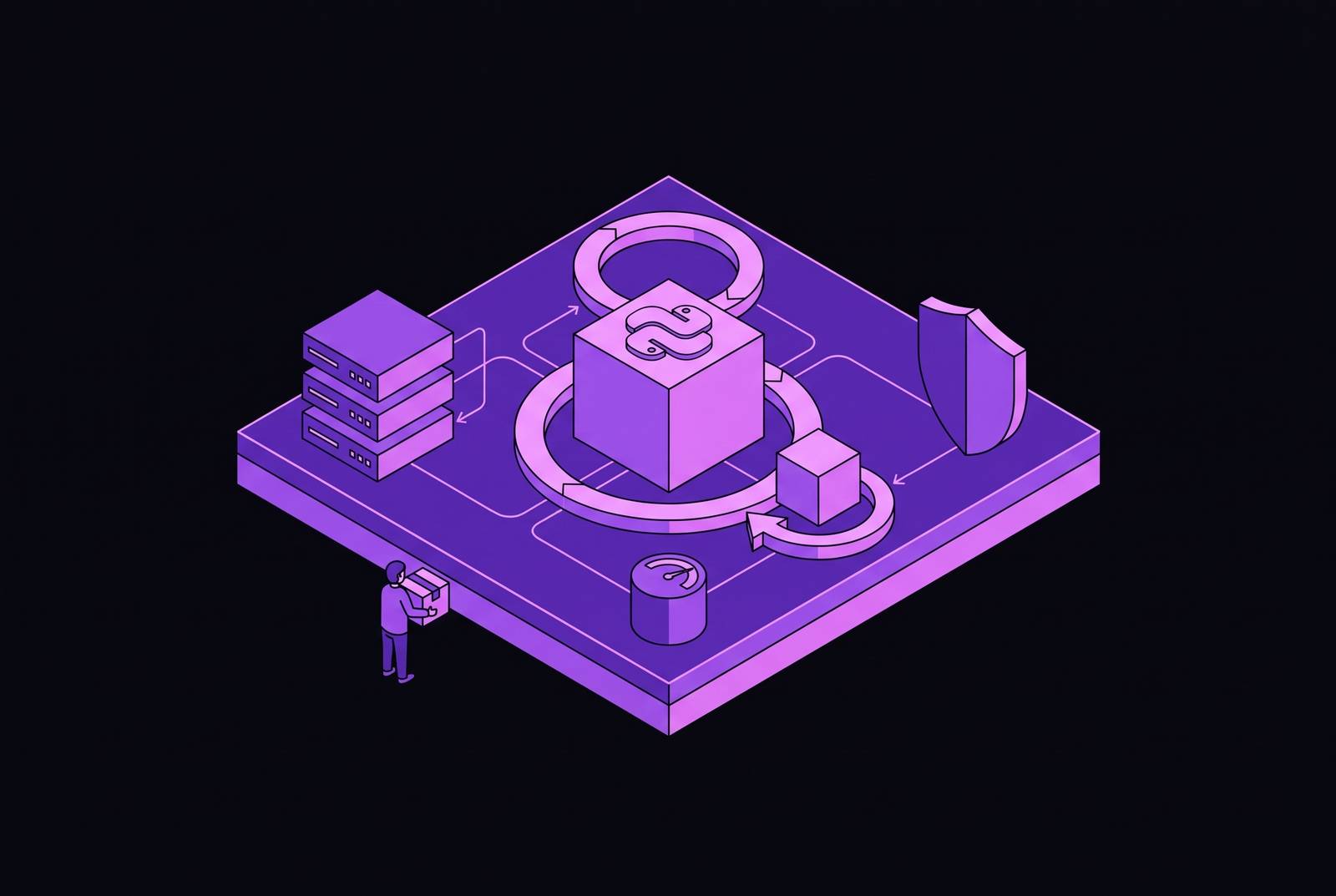
A solo founder can deploy a Python AI agent without knowing servers or infrastructure operations by choosing a managed runtime that owns uptime, state, secrets, scheduling, recovery, and observability. The builder still owns the task, tool permissions, output quality, and decisions about when the agent is ready for customers.
Why a working Python agent and a production agent are two different things
The demo feels finished because the environment is forgiving. One user asks a question, one session runs, and a developer watches the terminal. Then the first unattended run stops halfway through a task, and the missing infrastructure becomes obvious. The Python code may be doing exactly what it was written to do. It simply never owned the responsibility for recovering after a process restart.
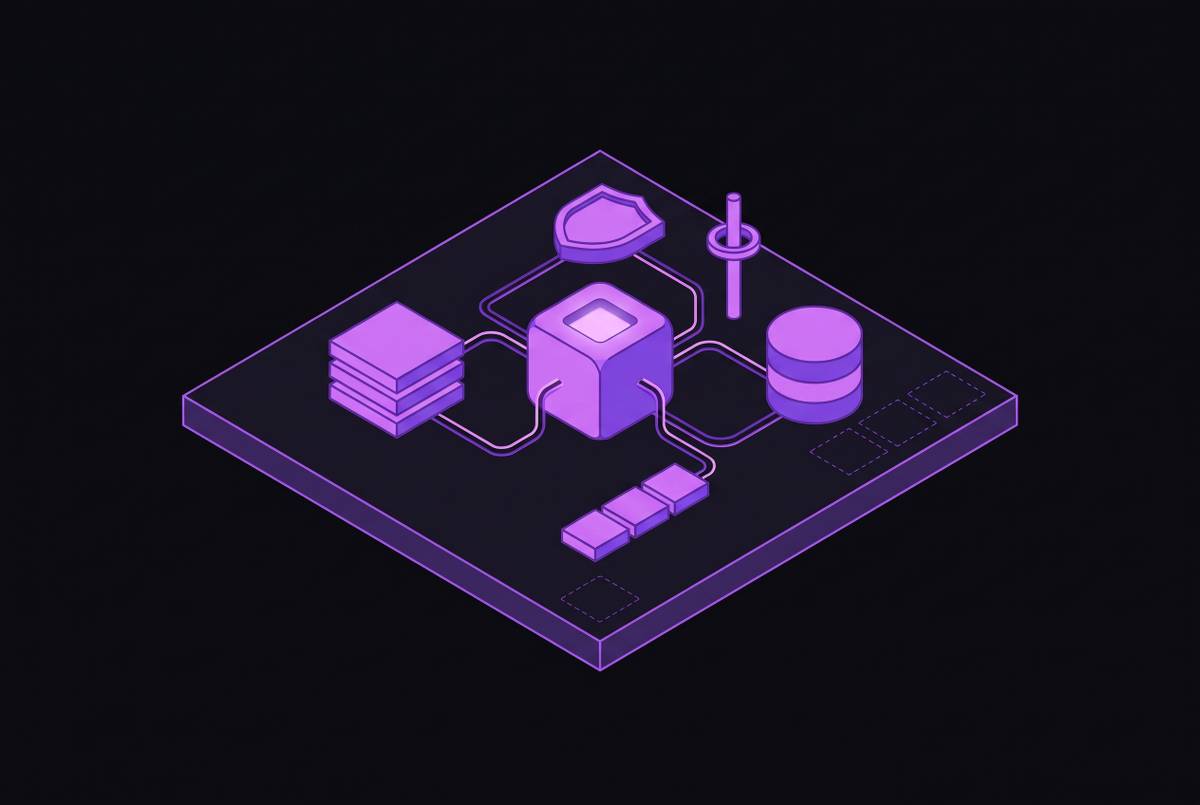
Message routing and job queuing keep work from silently piling up, while durable storage preserves context after a crash. A scheduler needs retry, timeout, and dead-letter handling so failed work does not become orphaned or duplicated.
The other layers govern what happens when work proceeds. A policy decision point checks an action before execution, and an output safety pipeline catches personal information and secrets that input controls can miss. An immutable audit trail gives an incident investigation something firmer than “we think.” These are architectural requirements. Adding more instructions to the agent does not provide them.
What “letting the runtime handle ops” actually means — and what it does not
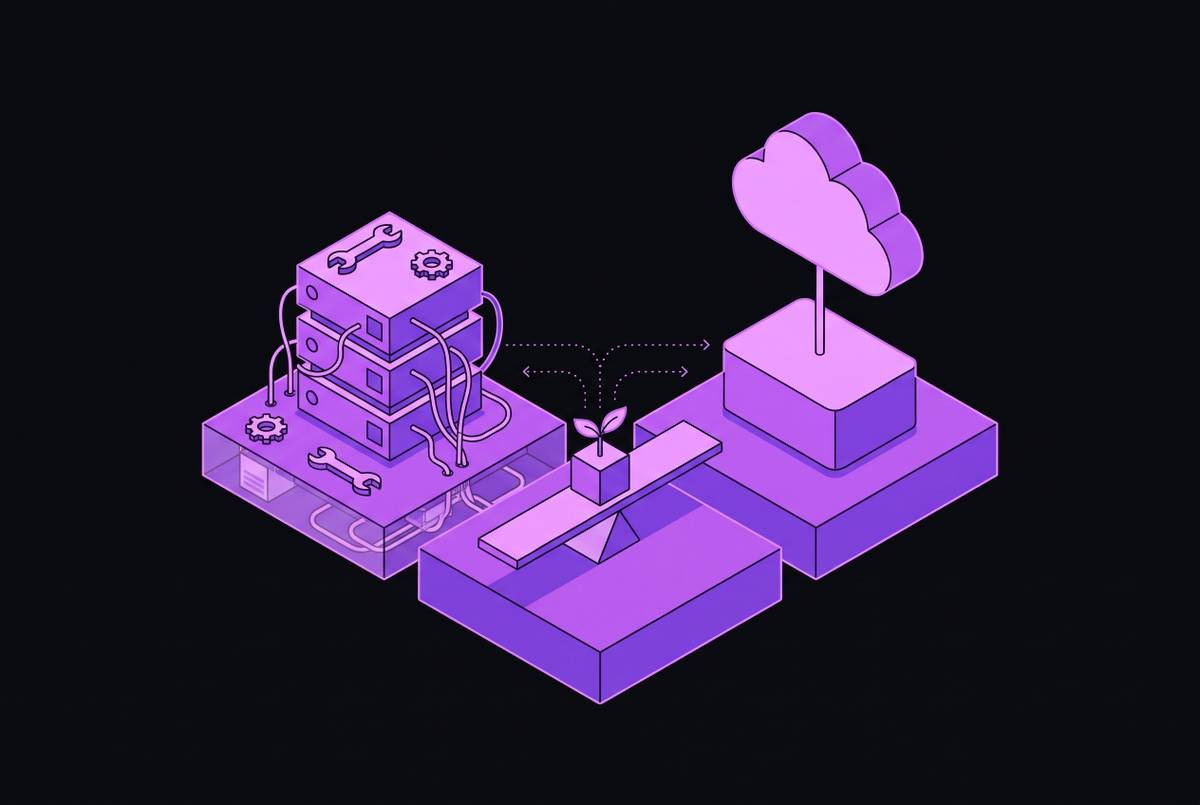
Before the handoff, a founder spends time setting up a VPS, building container deployments, connecting over a secure remote shell, configuring monitoring, and recovering failed processes. After the handoff, the founder defines the task and its guardrails while the platform operates the execution layer. That is the useful meaning of managed hosting. It is not a promise that every decision disappears.
In a fully managed arrangement, the runtime supervises processes and restarts them after failure. It provisions durable storage for run history, context pointers, and session memory, and injects credentials at execution time, keeping them off the agent’s filesystem. It triggers scheduled, webhook, or queue-driven runs and handles retries, timeouts, and dead-letter handling. Its console has session traces, tool-call logs, and error inspection, so there is no need for a separate logging stack.
The builder still has to define the task, choose the tools, set permission rules, and handle evaluation. So does deciding when a small test cohort can become full traffic. A platform can keep an agent running without knowing whether its work is useful.
Which platforms let you deploy an agent without managing infrastructure
Three managed categories offer different balances of infrastructure work, model freedom, and cloud dependence. Self-hosted frameworks are a fourth option, but they leave the infrastructure work to the builder. A useful comparison examines which responsibilities each option absorbs for the product being built.
Hyperscaler runtimes fit enterprise teams already tied to a cloud. AWS Bedrock AgentCore provides framework-agnostic execution, memory, identity, tool access, and observability, and reached general availability on October 13, 2025. Azure AI Foundry Agent Service supports multi-agent systems and integrates with Microsoft Entra ID and enterprise data sources. Google Agent Runtime, formerly Vertex AI Agent Engine, provides execution, sessions, memory, and native Agent Development Kit support within the Gemini Enterprise Agent Platform. This category offers deep enterprise integration and extensive operational abstraction, with less model freedom.
Model-vendor runtimes fit teams that have already chosen to stay with a provider. Claude Managed Agents launched April 8, 2026, with state, memory, permissions, scheduled execution, and tracing and tool-call inspection in Claude Console. It costs $0.08 per session-hour on top of standard token rates, and multi-agent coordination is in research preview. ChatGPT Workspace Agents are Codex-powered, cloud-run agents in ChatGPT Business or Enterprise, also in research preview, with no self-host option. OpenAI is closing Agent Builder on November 30, 2026, and directing developers toward its code-first Agents SDK or Workspace Agents. The fast path comes with provider coupling.
Developer-tier platforms give teams another way to use managed infrastructure without being as tied to a model. LangGraph Platform, now LangSmith Deployment, provides durable execution, checkpointing, human approvals, and tracing for LangGraph agents. DigitalOcean Managed Agents launched in public preview on September 22, 2026, with pay-per-use CPU billing and a large library of pre-built tools. By contrast, self-hosted LangGraph, CrewAI, OpenHands, and Letta leave the infrastructure layers with the builder. That control comes with the full operations workload.
Per-user agent isolation — why it is the load-bearing architectural decision for multi-tenant products
Hosting one agent is not the same problem as hosting a customer-facing product. For a multi-tenant product, the unit of scale is an isolated agent for each customer. The runtime needs to provision that environment automatically at onboarding. Otherwise, every sale creates another manual infrastructure job.
Isolation becomes especially important when an agent executes code it wrote, installs packages, or drives a browser. Its execution environment must not be able to touch another customer’s data. Shared infrastructure with sub-accounts does not establish that boundary by itself. Per-session sandboxes should have no standing credentials, reach only allow-listed hosts, and be destroyed when the task ends. For regulated customers, separating client data also reduces the audit exposure created by commingling.
A new customer’s agent should exist and be running before signup finishes, rather than waiting for the founder to configure it after the sale. Manual provisioning can seem harmless when there are only a few customers. But it costs more with each customer, until onboarding takes time away from selling and working on the product. Automation at that boundary is part of the architecture.
Connecting agents to real tools without managing every OAuth token yourself
An agent that can reason but cannot authenticate to Gmail, GitHub, or Slack cannot perform the work those tools require. Authentication is a separate operational layer from execution. Writing each API integration, refreshing each OAuth token, and setting permissions for each user recreates infrastructure that other teams also need. Moving compute to a managed runtime does not automatically remove that work.
An inbox-to-task workflow makes the distinction concrete. The agent checks Gmail every morning for messages matching specific keywords, then creates Notion tasks containing the subject, sender, summary, and thread link. A PR-to-issue workflow connects a different pair of tools. When a GitHub PR opens with a specific label, it creates a Linear issue. Both workflows depend on authenticated, appropriately scoped access.
Composio offers a free tier and managed-authentication connections for Gmail, Slack, GitHub, Notion, and over a thousand more tools. That gives a builder an alternative to writing those OAuth flows. Arcade.dev takes a just-in-time permission approach as an MCP runtime for tools including Gmail, Slack, GitHub, and Salesforce. The distinction is useful when choosing the integration layer. Tool availability and permission control both belong in that choice, because connecting an account is not the same as authorizing every possible action.
What the managed runtime does not handle — the governance controls the builder must own
Infrastructure ownership does not transfer authority over the agent’s behavior. The builder still decides which actions are safe, which are allowed, and which can be audited. The highest-leverage control is a pre-dispatch policy decision point that evaluates each action before execution. A running process is not a permission check.
In-process options include MS AGT, Galileo Agent Control, and NeMo Guardrails. These sit inside the agent’s trust boundary, but regulated deployments are increasingly expected to have out-of-process controls. The Microsoft Agent Governance Toolkit shipped on 2026-04-02 and formalizes a subset of these controls. Where policy gets enforced matters architecturally.
Rollout decisions remain with the builder as well. An all-at-once cutover can expose every user to a correctness regression before the team sees it. Progressively larger traffic slices allow objective gates based on error budget, policy-decision latency, approval-workflow turnaround time, and rollback-drill success. Those gates turn expansion into a decision supported by evidence.
The threat model still needs prompt injection, tool over-permissioning, data exfiltration, identity spoofing, and training data poisoning. Managed hosting does not erase those risks. Nor can it repair a shared API key that was never scoped to individual users. Credential boundaries have to match customer boundaries from the start.
Security and compliance posture for a hosted agent in production
Corporate buyers will ask about controls, data handling, contractual commitments, and whether the agent runs reliably. The relevant frameworks depend on the customer’s industry and location. There is no single compliance badge for every deployment. Procurement turns the architecture into questions that need specific answers.
SOC 2 Type II is the general trust baseline, and most enterprises in 2026 require it for production deployments. Some accept Type I initially with a commitment to deliver Type II. ISO 27001 is the international information security standard, and most regulated buyers expect SOC 2 plus that standard as the floor, with industry-specific requirements added.
HIPAA covers protected health information in US healthcare, and GDPR covers personal data in the EU. The EU AI Act applies to high-risk AI systems deployed in the EU. NIST AI RMF is a voluntary US framework for AI risk management. These frameworks are not interchangeable. A SOC 2 auditor’s report on security controls is not a HIPAA assessment and creates no obligation to sign a BAA.
Who owns the data can stop a purchase even when those controls look sound. Buyers ask whether agent conversations, files, and session data will be used to train AI models. For those buyers, the answer must be contractual. A policy page alone does not provide the commitment they need.
Turning a working agent into a product customers can use — the white-label and resale layer
Once execution and governance are covered, the next question is how customers buy and use the agent. White-label infrastructure can package it under a business’s own brand. But branding is not the architectural test. A themed chat widget on shared infrastructure is a white-labeled interface, but an agent that holds client tools, files, and credentials needs a separate environment for each client.
Stammer.ai offers a Pro White Label tier with chat and voice agents, a custom domain, logo and colors, and resale of replies, minutes, and agents at the seller’s prices. It also includes MCP, bring-your-own-LLM keys, and a white-label API. Its higher Pro plan has a larger pool of agents, unlimited client sub-accounts, and white labeling, while Full SaaS Mode lets teams run a large number of agents with bring-your-own-API-key economics. Those are packaging and resale features. Sub-accounts alone do not establish the execution isolation a product may require.
Stammer AI reports that agencies usually charge $300–$500/month per agent plus a markup on usage, while paying a modest amount for the platform. That is a reported pricing pattern with an uncertain profit margin. It shows why managed infrastructure can support a resale business without each seller building an operations team. The commercial value sits in the product delivered to the customer, while the platform absorbs infrastructure work.
What a solo builder or small team actually needs to do to ship a production agent this week
Decide whether the agent runs on a schedule, from a webhook, or on demand, and whether it needs memory across sessions. Check whether code execution or browser use needs per-session sandboxing. Then distinguish a single-user tool from a product needing a separate instance for every customer. The first buyers’ compliance requirements belong in this decision too.
Choose the runtime against those requirements. An enterprise team already on a cloud can use its hyperscaler runtime with existing identity and compliance tooling. A team committed to one model provider can consider that provider’s managed offering, with its portability and preview limits in view. A small team that wants managed execution without that tie to a provider can compare the developer-tier platforms. The choice depends on which operations jobs the team would still have to do.
Before the first production action, define the pre-dispatch policy check and scope credentials per user. Get the platform’s data policy in writing before paying customers’ data reaches it. Use a managed tool layer to handle OAuth flows for integrations it already supports. Expand traffic in stages, with objective gates.
Task definition, tool choice, guardrails, evaluation, and the customer cannot be handed off as server maintenance. For a solo founder, production readiness is therefore an ownership decision before it is another coding project.